Dove Song: A Review

Just to declare my potential biases up-front: I received a copy of Dove Song: Heavenly Mother In Mormon Poetry in exchange for a review. Also, I know some of the contributors. 

In my last review of a book of Heavenly Mother poetry, I asked for more: more perspectives, more poems, more essays, more talk of Heavenly Mother in general. Well, ask and ye shall receive, as Peculiar Press has come out with an entire anthology of Heavenly Mother poetry, from the early origins of the Church to the present day.

Read More

18 More Websites That Should Be Blocked on Church Wi-Fi

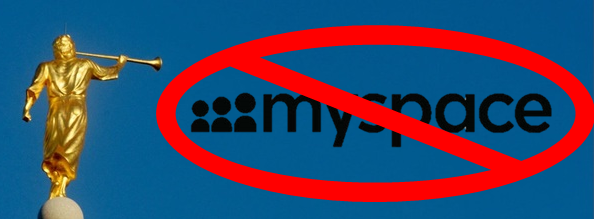
The Church announced (to its local leaders leaders) that some social networking, video and audio streaming, and gaming sites will be blocked on meetinghouse WiFi beginning this month. Of course when I saw the headline that mentioned social networking, I immediately thought of the 800-pound gorilla of social networking sites: Facebook. But no, it looks like Facebook has been spared, perhaps because some missionaries are now using it to find people to teach. Instead, the blocks hit sites like Pinterest, Twitter, Instagram, and MySpace.

Read More

Mother’s Milk: A Review

I first read Mother’s Milk, by Rachel Hunt Steenblik, last July, about a month after I learned I was pregnant for the first time. I tried to see myself as the mother portrayed in these poems, but mostly failed: I had constant nausea and threw up 5-10 time a day for two months straight in my first trimester, and so I felt no magical love connection to the fetus, whom we nicknamed Barfolomew. I mostly just felt tired, and irritated at the way this hostile force had overtaken my body. The poems were lovely, tasty snack-sized deep thoughts, but, like Lynnette has written about on this blog, I wasn’t really a Heavenly Mother person, and the mothering portrayed in many of the poems–nursing, weaning, comforting in the night–didn’t resonate with me. I tried to hold space to change my mind, though: many of my friends talked about childbirth as a quasi-magical experience, a primal connection to their mothering self, and, despite the pain, glowed about the love they felt for their child right away, or for a rush of instant recognition when their child was placed on their chest.

Read More

What Happens When Leaders are Duped by Predators, and Other Hard Questions about Spiritual Guidance

 The Mormon circles in which I am active have been rocked in recent weeks by the stories about Joseph L. Bishop, the former MTC president who has been accused by two women of sexual abuse during his time in that position. Much of the discussion of this situation that I’ve seen has focused on the problems of systems which protect predators, and a culture which disbelieves victims. I think these are vital problems to bring up, and I’m glad to see them being discussed. But I’d like to raise another issue which I see as central to this whole mess. To put it baldly: how is it that church leaders who are said to have special gifts of spiritual discernment get duped by predators? In other words, why didn’t the many church leaders who must have been involved over the years in selecting Bishop for different positions ever have any sense that something was amiss? And this is far from an isolated instance. You only have to raise the issue of what happens when people report abuse to church leaders on a blog or a Facebook group to get story after story of victims who weren’t believed by their bishops and stake presidents. I’ve seen this firsthand, watching an abusive relative con multiple local leaders into accepting his extremely farfetched version of events. Yet I was taught again and again during my decades in the church that leaders had special access to revelation regarding those under their stewardship, that they were being guided by the Spirit in their judgments. How is one to make sense of all of this?

Read More

That’s *President* Soares to You: Probabilities of New Q12 Members Becoming Church President

I’m so happy that I was so wrong last week when I predicted that President Nelson would call two white men from Utah to fill the openings in the Quorum of the Twelve. I’m thrilled that Elders Gong and Soares can bring some new perspectives to the Q15. And of course, one of the first things I looked up when I learned that they had been called was how old they are, because I was curious about what the chances were that either of them would make it to be Church President.

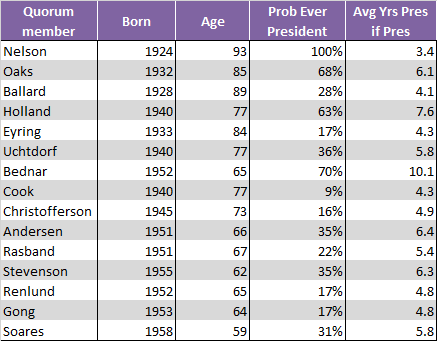
In this post, I’ve updated the simulation that I’ve run before to estimate the probabilities of each Q15 member becoming Church President. I last did this just a few months ago when President Monson passed away.  The gist of it is that I use a mortality table from the Society of Actuaries, assume that the yearly mortality probabilities apply to all members of the Q15 equally, and then run a bunch of simulations (100,000 in this case) and in each, pick a bunch of random numbers and compare them to the mortality probabilities for each member and use the comparison to work out how much longer each man would live, and the resulting way that the Presidency would be handed from one member to the next–which members would get to serve as President and which ones wouldn’t. The process is described in a little more detail in this post from 2015. Anyway, the numbers for the most senior 13 members have changed little since my post in January. What’s interesting here is the probabilities for the new Q15 members.

The table below shows the probability of each Q15 member becoming Church President, and how many years he would serve if he did. Note that if you compare carefully, you might notice some small discrepancies between this table and the one in my January post. When I was running the simulations for this post, I realized that when I ran simulations for my January post, I had calculated current age by rounding to the nearest birthday (e.g., a man who is 65 and 7 months is counted as being 66) rather than the more conventional approach of calculating it by just looking at last birthday passed. If you noticed this error in the previous post and didn’t feel the need to correct me, thank you!

Read More

General Conference Predictions

General Conference starts tomorrow, and this provides all kinds of opportunities to speculate about what changes in the Church it might bring. Of course we can speculate before every Conference, but this one is particularly ripe given that there will be two new members of the Quorum of the Twelve called, and that it will be President Nelson’s first Conference. President Monson was unwell for years, so there may have been big decisions that the other Q15 members left unmade. Now, with President Nelson appearing to be in good health, he may move forward with some items that had been on hold.
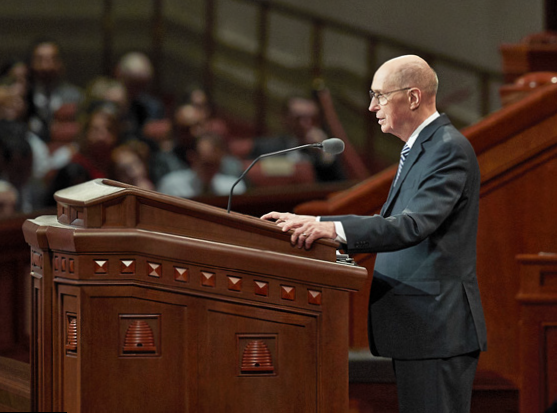
Here’s my speculation about the new Quorum of the Twelve members: They will be white, and will have a strong connection to Utah. Risky speculation, I know! Seriously, though, I was extremely disappointed in 2015 when, even with three Q12 positions to fill at the same time, President Monson still couldn’t bring himself to call a person of color to the Quorum. My guess is that President Nelson will be even less likely to do so. Also, given how much he clearly loves God’s Most Holy and Most Blessed Order of the Eternal and Most Divine Gender Roles, Which Were and Are from All Eternity to All Eternity, I’m betting that he won’t call anyone like Elder Renlund to the Quorum. Elder Renlund’s wife had (gasp) a career, and to make it worse, only one child. I really doubt that President Nelson could see someone like him as being faithful enough. So my expectation is not just two older white men with ties to Utah, but two older white men with ties to Utah who are descended from polygamists and whose wives were SAHMs and had plenty of kids.

A question that might be even bigger than who the new Q12 members will be is whether President Nelson will canonize the Family Proclamation. This seems like the perfect example of an issue that was left in limbo with President Monson’s deteriorating health, that President Nelson might jump to solve. Really, though, after reading a bunch of discussions on the Bloggernacle and on Facebook, I’ve come to agree with those who argue that it doesn’t really matter if he does or not. One of my sisters pointed out that for the FamProc to enter the canon would kind of be a step down. The canon is what we read now and again and pull proof texts out of. The FamProc is what we love so much that we hang it on our walls! It’s better than canon. What I really expect is that, rather than canonizing it, President Nelson will borrow some lines from Joseph Smith and tell us that “The Family Proclamation is the most correct of any proclamation on earth, and the keystone of our religion, and a man will get nearer to God by abiding by its precepts, than by any other proclamation.” That’s what he’ll do: cement its place as super-canon.

It also might be worth wondering whether President Nelson, or any of the other speakers, will mention all the fallout from the Joseph Bishop scandal. My guess would be no, both considering the timing–all the news has broken so close to Conference, and talks are planned well in advance–and the content–GAs won’t want to bring the issue to the attention of anyone who hasn’t already heard about it. This is a topic like polygamy, where the Church will probably be sure to keep any of its responses carefully out of the way of most members, to avoid causing more trouble than they solve. Kind of like the Gospel Topics essays.

What do you think will happen at Conference?
 

It is the nature and disposition of almost all men

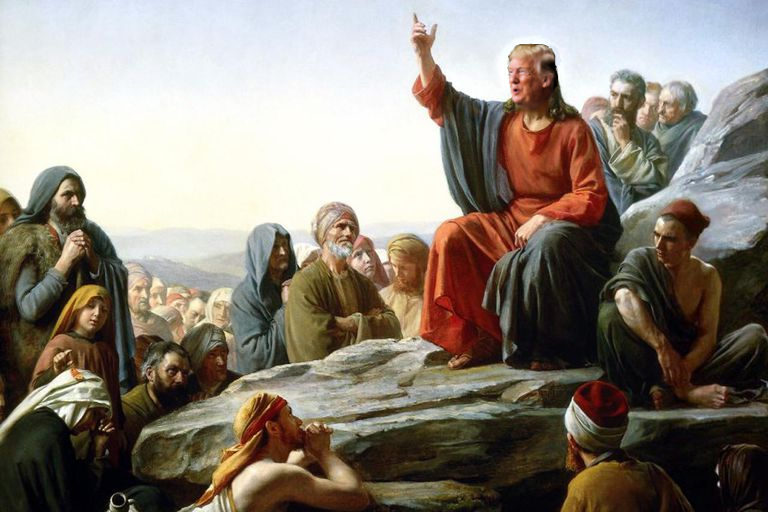
Like many Americans, I have had a new appreciation for the existence of checks on the President’s power since Donald Trump was elected. They may not always work as they were intended to, but I’m glad that at least the framers were concerned about the question.

The organization of the US government (and of many other governments) is a striking contrast in this way to the organization of the LDS Church. As the Joseph Bishop story sadly shows, there really aren’t checks on the power of LDS church leaders. I mean, there are in cases where they do outrageous things in public, or if they get on the bad side of leaders over them. But what I’m talking about here is that if a church leader does awful things in private to the people he’s presiding over, then the victims have pretty much no recourse. A situation like this can always be reduced to he said/she said, and the presumption of higher-level church authorities appears to pretty much always be that the accused leader is innocent. The woman assaulted by Joseph Bishop reports having raised years later to her then-bishop, but he said he found her accusations not credible, based on the simple fact that Bishop had been called to several high callings in the Church.

Read More

As Now We Pass the Sacrament

This is slightly adapted from a sacrament meeting talk I gave a few years ago (hence, all the numbers are out of date). I recently stumbled on it while cleaning out some files and decided to share. 

Let’s start with something about me: I have been a church-attending Mormon all my life. let’s calculate, for a minute, what that means, besides a closet full of skirts and a knowledge of all the verses to “I Believe in Christ”: I have taken the sacrament to renew my baptismal covenants approximately 782 times–17 years since my baptism, at 46 Sundays a year. (52, minus two Sundays for General Conference and two for stake conferences and two more for vacation Sundays or simply arriving at church late. I didn’t say I’ve been a perfectly church-attending Mormon all my life!)  That, my friends, is a lot of times to do something and still not quite understand or enjoy it.

Read More

Women Are Like Hydrogen

I read some discussion on Facebook recently of a diagram showing the organization of the Church. I think the diagram was something like what’s shown in this post, but I’m not completely sure. Whatever the exact details of the diagram, what’s important about it is that the structure it showed included only men: First Presidency, Quorum of the Twelve, Seventies, stake presidents, bishops, etc. The striking thing was its exclusion of women.

I don’t fault the person who made the diagram or whoever shared it. It looked to me like it accurately captured how the Church is structured. If women are included anywhere, it’s at the margins, and perhaps informally, if any of the men in positions of authority ever discuss issues they’re facing with their wives.

I do think it’s interesting, though, that to be included in the hierarchy, men must be married. Bishops I think have to be married by rule. I’m not sure if it’s a rule for the other positions, but if it isn’t, it’s at least an extremely strong norm. The fact that each of these men is married but that their wives aren’t shown reminded me of diagrams of the structures of molecules that one of my kids was showing me recently. In at least some forms of these diagrams, most hydrogen atoms are not included explicitly. They are just assumed to be bonded at each atom where they would be required for the atom to have the right number of valence electrons.

Here’s an example, courtesy of the NIH’s PubChem website:

Read More

Are Mormons More Homogeneous in Belief than Members of Other Churches?

Since she started attending church with the Episcopalians, I’ve heard my sister Lynnette observe that members of her new church appear to have a much broader range of beliefs than Mormons do. I guess I had never really thought about this, but if it’s true, this seems like maybe it shouldn’t be too surprising. There is lots of pressure to conform in Mormonism, all the way from scriptures that have Jesus saying “I say unto you, be one; and if ye are not one ye are not mine” to talks that exhort members to set aside the cultures they grew up in to join “the gospel culture.” And of course, this doesn’t even touch on the pressure at the local level to conform. Consider, for example, the immense backlash faced by women who participated in the “wear pants to church” actions a few years ago. They were not even going against a rule of any kind, but rather violating a norm and standing out, and this made a lot of rank-and-file members appear to lose their minds. I don’t have a very good sense of the Episcopal Church in general, but I’m guessing that, like many American Protestants, they are simply less top-down in their structure than Mormons are, so there’s more room for differences of opinion or even belief.

Really, though, what I thought would be even more interesting than reasoning out why or why not Mormons might be more homogeneous in belief than members of other churches, would be to see if there were any empirical evidence of this difference. It occurred to me that a great place to look would be the data gathered by the Pew Research Center in their Religious Landscape Study. It’s a US sample only, so it misses the larger fraction of Church membership that lives elsewhere, but it does represent the largest single concentration of Mormons in one country. I looked at Pew’s 2014 data. As these data are a few years old, they’ve already been discussed quite a bit on the Bloggernacle. I am coming at the results from a new angle, though. Rather than focusing on the particular answers respondents gave, I am interested in how similar the sets of answers are for members of the same church, regardless of what the particular answers are.

Read More

A Man By Any Other Name

When we were using the Joseph F. Smith manual for Relief Society a few years ago, I remember reading a note in the intro material about Smith’s use of “men”, “man”, or “mankind”:

“Also, President Smith often used terms such as men, man, or mankind to refer to all people, both male and female. He frequently used the pronouns he, his, and him to refer to both genders. This was common in the language of his era. Despite the differences between these language conventions and current usage, President Smith’s teachings apply to both women and men.”

Read More

Penitence: Some Reflection on Lent  

When they asked us about the meaning of “penitent” at a church group I was attending the other night, I have to admit that the first thing that came to mind was Indiana Jones and the Last Crusade, when near the end of the movie Indiana is going through various obstacles to get to the Holy Grail. The instruction is that “only the penitent man will pass,” and at the last minute, he realizes he has to kneel in order to avoid having his head chopped off. So when I hear “penitent,” I think, “be humble before God or be decapitated,” which seems like potentially useful information, especially if I ever go on a religious quest that involves elaborate traps.

Read More

God’s Economy Is Different

The argument goes like this: if women get the priesthood—I mean, they won’t, because God doesn’t want them to, but just imagine if they did—then what would men do? They wouldn’t have anything special anymore, and if they can’t have anything special, why would they participate? Or sometimes it’s like this: if women have the priesthood (or, toning it down, if women can be Sunday School presidents, or pray in sacrament meeting, or what-have-you), fewer men will get to do it, and we wouldn’t want to limit their opportunities.

Read More

Calling You to Do Better Rather than Decimating You

I was sitting in church a few weeks ago and noticing how several of the scriptural texts were about God calling people: Samuel hearing a voice and wondering what it was, Psalm 139 (“Lord, you have searched me out and known me”), and the encounter of Jesus with Nathanael. As I was listening to the sermon, which also touched on these themes, and emphasized God’s call to each one of us, and the need for our community to make space for everyone to become what God is calling her or him to be, a question came to mind which I’ve often pondered: how do you discern between a call or a challenge that pushes you in healthy ways, make you grow, and brings you closer to God—and one that simply beats you down and leaves you broken? Read More

It’s my church too

I was lucky enough to grow up with unorthodox Mormon parents, who patiently listened to and sympathized with my teenage and college-age complaints about going to church: how boring it was, how my YW leaders could never answer my questions, how I often felt like I just didn’t fit in. And every conversation, at least in my memory, ended with a gentle reminder: “Remember,” they’d say, “it’s your church too.”

Read More

Getting Baptized

I didn’t actually have to get baptized as part of my conversion. The Episcopal church doesn’t have a clear policy on what do with Mormons—while Catholics and some Protestants have ruled that Mormon baptism is invalid and converts from Mormonism must be baptized, Episcopalians have been rather less definitive. There are certainly LDS converts to Anglicanism who’ve made the religious transition without being baptized (perhaps most notably a former Episcopal bishop of Utah). When I first started playing with the idea of converting, I figured I’d do it via confirmation only; I liked the idea of holding on to my Mormon baptism as a way of maintaining continuity in my religious journey. Read More

Waiting for Visiting Hours: Memories of the Psych Ward

It’s been almost two years since I was last hospitalized (yay!), but I’ve been reading through some of the journals I kept while I was there, and it put me in the mood to reflect yet again on some of my experiences.

In every psych ward I’ve been in, visiting hours were restricted to an hour or two a day. After lots of experiences with this, I’d actually forgotten that for people in regular hospitals, they usually let people come throughout the day and only send them away at night; I remember asking a friend of mine who was in the hospital for medical reasons a few years ago when I could visit, and being surprised when she said, anytime. In the mental hospital, they seem to think it’s a distraction that needs to be limited. Though at least everywhere I stayed, they had visiting hours every day; I’ve heard of places that only allowed them a few times a week, if even that, I think on the theory that you needed to focus on their program and on getting better, and less contact with the outside world would help you do that. I would have really hated that.

Read More

 Where ZD is Going

A particular combination of life circumstances last year lured me back into being a more active blogger than I’d been in a while. However, as the year went on and I started to suspect that my religious dabbling elsewhere might be turning into a serious thing, I found myself grappling more and more with questions about what it meant for me to be blogging on a Mormon blog. When I finally made the decision in November to convert away from Mormonism, I realized I was going to have to address the issue at some point. Should I keep writing about my religious journey and explorations of faith here, I wondered, or would it make more sense to go elsewhere? I don’t feel done with blogging, certainly; there’s still so much that interests me about religion (inside as well as outside of Mormonism), and there are other topics that I’d like to write about as well. But given where I am, I’ve worried about whether it really makes sense to continue to share my thoughts here.

Read More

An Agenda for President Nelson’s First 40 Days in Office

Day 1: Demote Dieter F. Uchtdorf to regular old member of the Quorum of the Twelve.
Day 2: Talk to the staff at the Ensign and lds.org, and tell them to get the women out of the centerfold in the Conference issues and off the General Authorities page.
Day 3: Get to work editing hymns. In verse 2 of “In Humility, Our Savior,” change the beginning of the second verse from “Fill our hearts with sweet forgiving; Teach us tolerance and love” to “Make our hearts obedient to thee; Teach us who we must not love.”
Day 4: Schedule a tour to promote Sister Nelson’s book The Not Even Once Club.
Day 5: Compose a letter to be read in all sacrament meetings that exhorts members to leave some positive reviews of The Not Even Once Club on Amazon.com.
Day 6: Work with Sister Nelson on her manuscript tentatively titled The Don’t Even Think About It Club.
Day 7: Announce a new, improved exclusion policy that bans the children of parents in a gay marriage from entering meetinghouses.
Day 8: Demote Dieter F. Uchtdorf to Seventy.
Day 9: Talk to the facilities management staff about getting those pesky “Visitors Welcome” signs taken down from meetinghouses.
Day 10: Send out a decree that all sacrament meetings must include a reading of the Proclamation on the Family.

Read More