1. Openly gay member of the Quorum of the Twelve
or
2. Female member of the Quorum of the Twelve
And why? Read More
1. Openly gay member of the Quorum of the Twelve
or
2. Female member of the Quorum of the Twelve
And why? Read More
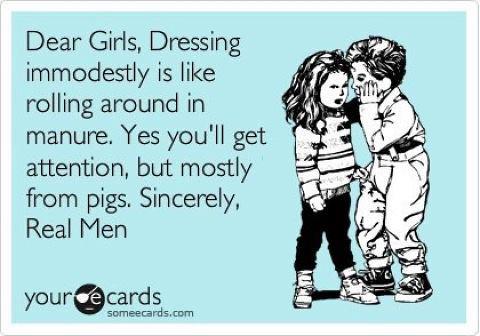
Likely everyone has come across the following internet/facebook meme, but just in case you’ve been backpacking in the Andes for the last two weeks with no wifi, or don’t have well-meaning conservative facebook friends, or have blocked all the well-meaning conservative facebook friends, or just aren’t on facebook precisely so you can avoid things like this, here you go:
One of the key principles of developmental psychology is continuity and discontinuity. In lay terms, this refers to what changes and what stays the same within an individual over time. I have been thinking a lot about this recently because of my own personal journey into motherhood and how that journey evolves as my son grows and changes. Last week, I pulled out the photo books that my mom had faithful constructed of my growing up years. Just looking at the photos reminds me of the type of person I was throughout childhood, high school, and undergrad. I was always very contemplative and “in my head”. Read More
When the BBC’s modern version of Sherlock aired in 2010, it appealed to my deep seated love of problem solving, mysteries and attention to detail. I had read The Hound of the Baskervilles and one or two of the short stories in the past, but decided to read the entire Sherlock canon, which is comprised of four novels and 56 short stories. Overall, they were a very enjoyable read. However, given that the stories were written between 1887 and 1921 it is not surprising that Sherlock holds some extremely sexist attitudes. Read More
I had the opportunity (and the very narrow window of time) a few weeks ago to drop in on exactly one session of the Salt Lake City Mormon Stories Conference. I was pleasantly surprised there when I got the chance to meet and listen to one of my blogging crushes–the “Mormon Child Bride.”
Her reflections about faith transitions, navigating family and cultural expectations, authentic living, and experiences with doubt and belief were so perfectly done, so wonderfully vivid, and so refreshingly well-composed (as only a teacher of English could do) that I asked if I could share her latest here.
Graciously she agreed, and so, without further ado, I give you the words and the faith journey of the very much admired MCB.
We are excited to announce that we’ve adopted two more ZDs: Beatrice and Galdralag, from the outstanding blog Both Sides Now.
One of the overarching themes that I see reiterated throughout the bloggernacle – or perhaps, one of the pervasive subtexts – is that LDS people are in need of pastoral care. They seek a space to voice their doubts, to bring their honest concerns and deepest hurts; to ultimately come and find the succor and peace of God. And, because we are a church run by laymen, we struggle to find that space. We are not always, despite our best intentions, able to serve one another. We cannot always see each other’s hearts. We cannot always offer love as we should, or compassion as we should. Most often, I believe, people seek mercy and understanding. They want to know – they need to know – that despite their stupidity, their arrogance, their mistakes, despite being petulant and petty, despite sometimes being mean and cruel, they are and can be good enough. They can change. They can grow. They can purge themselves of the ugly parts. It’s worth trying again. They are worth it.
E-mail received today:
Bishop ***** and I both endorse an effort of the ******* Catholic Church to bring to light religious freedoms being encroached upon by our government, and encourage all Latter Day Saints to participate in an open invitation to all Christian congregations to attend an Interdenominational prayer service for religious liberty on Saturday June 16th @ 7:00 PM at **********.
Let’s support our Christian Brothers in something we can agree on!
Note (added after publishing): Some have (I can now see, understandably) assumed that this e-mail was sent by the Bishop’s wife. However, it was actually sent by a bishop who is just referring to a neighboring ward’s bishop who is in agreement. So, there was no “pulling rank” from a wife going on or anything strange like that.
Or, What The Media Doesn’t Mention About Mormons in Business
The Economist recently published an article about the prevalence of Mormons among successful businesspeople, and it’s certainly not the first publication to do so; there’s an entire book dedicated to the so-called “Mormon Way of Doing Business.” (Are we, as a people, really so prevalent in the top echelons of business? And here I thought Mormons were all lawyers, dentists, and podiatrists!) These articles have all noticed a peculiar correlation out there in the wild world of business, one that goes a little bit like this: Read More
Any good descriptive linguist will tell you that words aren’t defined by the dictionary; they’re defined by the communities who use them. Consequently, a word like “preside” doesn’t necessarily mean, in the context of Mormonism, what a general-use dictionary says it means. While its secular/worldly/dictionary definition might be “to exercise authority or control” ((preside, v. OED, 3rd edition, March 2007; <http://www.oed.com/view/Entry/150739>)) or some such, in Mormonism, it actually means “to be the seat of the authority while also being equal to everyone in a non-hierarchical authority structure, and maybe also have veto power,” or some such. ((This is really my best attempt at defining “preside” according to the most apologetic, non-in-charge definition I can come up with. If you have a better one, have at it, but you’ll also have to have-at whether it changes the way I’m analyzing the term’s deployment, below.))
If you’re in Utah in August, you should definitely check this out. It looks like a great conference. See details here.
I’ve been reading a book and it has me all curious about something. So, just let me know, in the comments.
E or I
Which do you lean more towards?
I wrote this two years ago and just happened to come across it today.
My senior year at BYU was pretty darn lame. But, you know, it was only lame because I made it lame with my panic. You see, it was the first time I actually realized that I was going to be graduating…with a humanities degree…and I was still single…
The irony of the whole thing was that I was totally blindsided. I was that girl who would shake her head sadly at those other girls in MFHD/ElementaryEd** who came to college to “get married.”
“You go to college to…GO TO COLLEGE,” I would intone philosophically at BBQ’s.
But, ya know what? Come September 2005, I was in full scale panic. Read More
Today is a day when I wish to honor the crowning glory of God’s creation, that being which is supernal among God’s children, whose qualities mirror as no others’ do the supreme love, grace, and dignity of its creator; whose elegance, gentleness of soul, and unique reproductive capacities bespeak its divine origins. I speak of course of Wombat, the shnuffliest and burrowingest of all Australian mammals, the most pudgy-nosed and adorable. God indeed has a special love for his wombats.

On the Friday before Easter, I went to a Tenebrae service at a Luthern church on the other side of town. We sang hymns in minor keys and read through the passion story, up to the Crucifixion and ending there, as the candles in the church were slowly extinguished, and the sun outside the high windows sank below the horizon. When the service ended with Christ still in the tomb, it was nearly dark inside the church, and the last of the light outside was the deep, heavy blue just before nighttime has entirely settled; the congregants walked back to their cars in near silence. I had rarely felt so still, like the weight of the words and darkness had sunk over me, the hand of God had come to quiet all the seething inside that I couldn’t calm on my own. Read More
I mentioned in my last post that I found FMH in the spring of 2005. I periodically looked at the bloggernacle that year, but much of my time online was spent on another, mental-health related message board, and I didn’t have time to be involved in many more online activities. Also, while I was intrigued by Mormon blogs, I was also intimidated, and I have to admit that I was uncertain that I would find any welcome there. In Mormon contexts I’ve so often felt like an outsider, and I worried that the same dynamic would be at work online. So while I was interested to see people discussing such a wide variety of questions, I didn’t follow the blogs very closely.
I’m not sure what shifted, but in December of that year, I decided to start commenting on FMH. Read More
As I mentioned in my last post, I wasn’t planning to study theology when I went off to grad school. But once I started, I fell in love with it. I’ve blogged before about how it affected my faith more generally. But here I want to mention some of the issues that came up which were particularly related to my developing feminism, and mention some of the questions I was thinking about.
I didn’t plan to go to BYU. In fact, I planned to go anywhere but BYU. As a teenager, I was determined to get out of the state of Utah. But when my senior year rolled around, and BYU offered me money, and I looked at the financial realities of my situation—it made sense. So in the end, I gave in.
I first saw the Star Wars movies when I was eleven, shortly after my parents purchased our first VCR. I was an immediate and enthusiastic convert. My siblings and I watched the movies over and over—in the days before we owned them, we used to check them out from the library every week (my mother would ask, are you sure you don’t want to try something new? and we would inevitably answer, no). I can divide up my life into Before Star Wars, and After. Read More
When people talk about the reasons for uncivil behavior on the internet, anonymity is often mentioned as a culprit. If no one knows who you are, the theory goes, you’re less likely to censor yourself. And it certainly is ridiculously easy to find people posting under pseudonyms and tearing each other apart. (Just check out the comment section of most newspapers.) Read More